
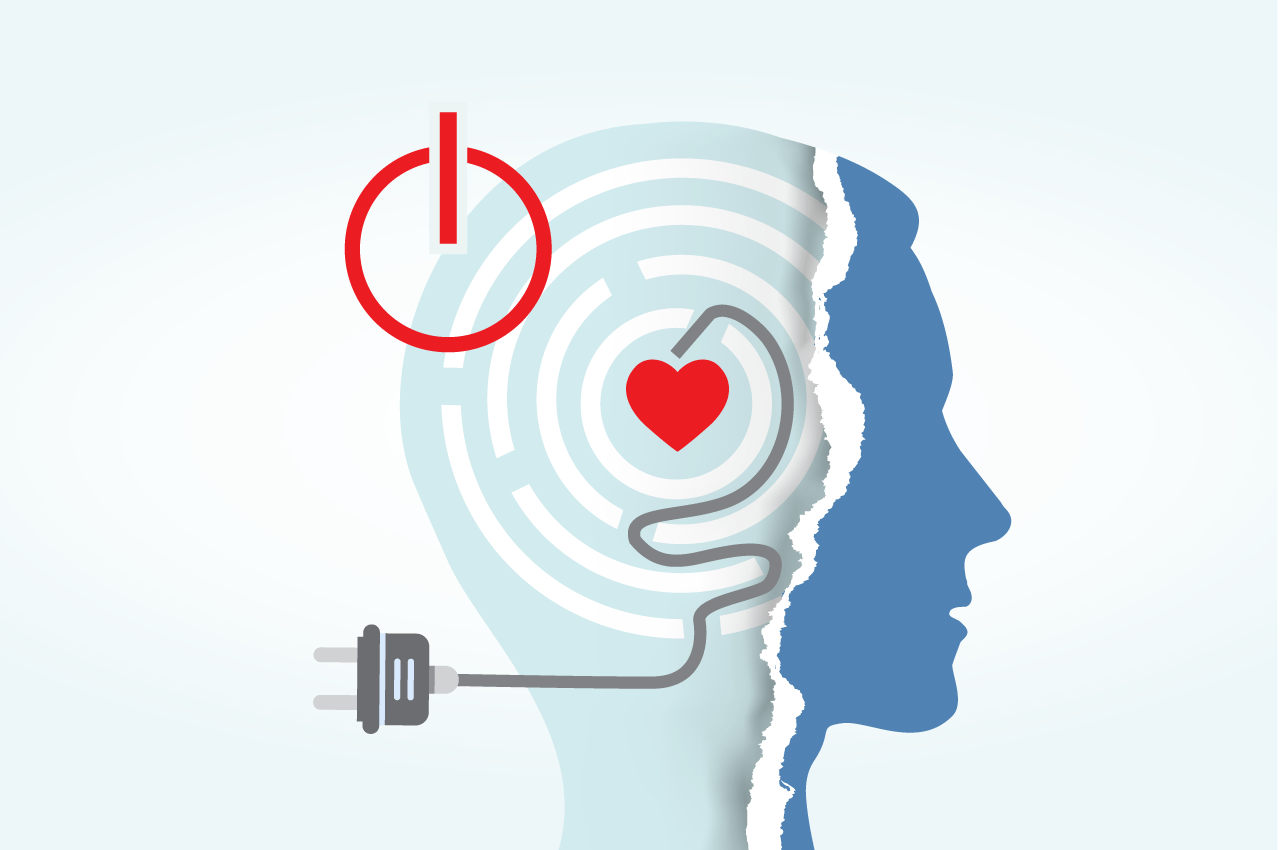
With October being Mental Health Awareness Month, here are some ways to boost your emotional intelligence to live a more balanced, successful and happy life.
Make emotional intelligence your strongest power
Imagine life as a kind of RPG (that’s role-playing game for non-gamers). When we choose our character, we focus on the qualities we feel will best serve us to win the game. ‘Intelligence’, ‘strength’ and ‘strategy’ tend to top the list. Yet, as it turns out, in the real game of life we need more than textbook ‘cleverness’. Actually, it’s our emotional intelligence that is the most potent power of all.
As human beings, we have evolved to where we are largely employing our natural survival instincts. Emotions are a crucial part of that. Think about it. Without fear, we wouldn’t recognise the need to run from danger. Without a sense of vulnerability, we wouldn’t have devised ways to keep ourselves safe. Without a yearning to connect, we wouldn’t have made the social links that make us stronger. Part of the problem is that in our science-and progress-oriented world, we tend to focus on intellectual intelligence (IQ) and downplay our emotional feelings.
Yet, since emotions tend to make us feel vulnerable, we tend to put a defence system in place. Because anger and aggression appear to be more powerful, they are often used to disguise sorrow or fear, particularly in men. In fact, male depression and anxiety sufferers are more likely to show signs of anger, irritability and rage, rather than sadness or anxiety.
Researchers are discovering that in living a successful life, or emotional awareness, our ability to express our emotional selves (EQ), is equally, if not more, important than traditional IQ. With October being Mental Health Awareness Month, here are some ways to boost your emotional intelligence to live a more balanced, successful and happy life.
Steps for emotional strength
- Be self-aware. In order to make improvements, you need to know ‘where you are now’, that means ‘what you are feeling’. Developing self-awareness is the best way to do that.
- Follow the why. Since there is a ‘reason’ for every feeling, start using the word ‘why’ to help identify what’s really going on emotionally. For example, someone might push in front of you in a queue and you feel that hot flare of rage. Ask yourself ‘why’? Is it because I’m angry? Why? Is it because they’re rude? Why does their rudeness make me angry? Is it because I feel disrespected? And so on. By following the ‘why’s’, you’ll be able to explore your emotions more deliberately. Writing these thoughts down can also be helpful. If you don’t feel comfortable journaling on paper, try a wipe-clean whiteboard or make voice recordings.
- Testing, testing. You can’t do a standardised test to figure out your EQ, as you might with IQ, but there are various appraisal methods to do so. Although a quick self-assessment may not be sufficient for an in-depth analysis, it will give you some idea of where you stand.
- Get help. If you’re really struggling to get going, reach out for professional help – the combination of a counsellor’s expertise in recognising emotions and a non-judgemental space will help in identifying emotions and working on them. Remember that free, confidential, professional support is available to you through your employer support programme. All you need to do is call the number in the footer of this article.
- Work out. We don’t expect to build muscles by hitting the gym once a month, so why should it be different for developing EQ? This process takes effort and focus, so don’t give up after a day. Keep going in cultivating self-awareness and, in time, you’ll surely be mastering your quest – and with that the game of life.
Your EQ tool kit
- Get smart. If you’re a complete newbie when it comes to getting in touch with your emotions, use a smartphone app to get started. Moodflow helps track your emotions, thoughts and moods, while Mood Meter helps you recognise them.
- Figure it out. Find out where you stand and start working on it with some EQ exercises, downloadable for free from Positive Psychology.
- Watch and learn. YouTube has hundreds of useful videos, such as Developing Emotional Intelligence by MindToolsVideos and Daniel Goleman Introduces Emotional Intelligence.
References
- Evolution of human emotion: https://www.ncbi.nlm.nih.gov/pmc/articles/PMC3600914/
- Men and depression: https://www.nimh.nih.gov/health/publications/men-and-depression
- Writing for emotional health: https://www.sciencealert.com/here-s-how-writing-can-improve-your-self-awareness-and-mental-health