With lock-down easing, we must continue to protect ourselves, and be even more careful when we, or someone else, has other health challenges.
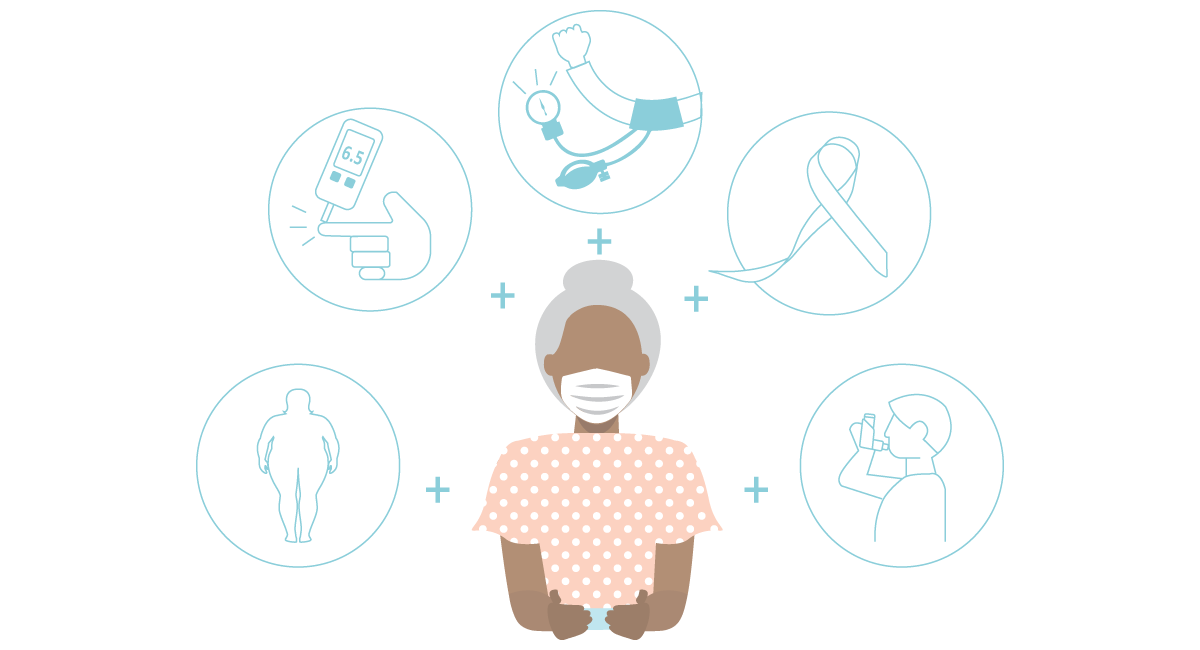
A ‘comorbidity’ is when someone already suffering from a chronic illness catches yet another disease. Now they have more than one health condition. This severely challenges the body’s ability to fight the diseases. With the defence system compromised there is a risk of severe illness or even death. With COVID-19 specifically, any of the following diseases demands even greater care:
- Obesity
- Diabetes
- Hypertension
- HIV
- Asthma.
Remember, if you do get infected with the Covid-19 virus, the risk is low if you are young and healthy. BUT you must still self-isolate, or go into quarantine. This is to avoid infecting others who might still be at greater risk.
What’s the difference between isolation and quarantine?
Isolation: People infected with Covid-19 must separate from everyone. This prevents the spread of the disease.
Quarantine: If you’ve been exposed to persons with COVID-19 you must separate yourself from everyone. Wait to see if symptoms develop. If after the prescribed quarantine period you are symptom-free then you can follow the lockdown rules.
When we re-evaluate the risk in South Africa it emphasises just how important it is to heed the advice. The current (1st July 2020)SA infection rate of 160,000 + might appear insignificant when compared with the 10.7 million already infected in the world, and it’s death rate of 2,750 pales when compared with the 516,000 + deaths worldwide, but this does not tell the full story.
Fact is that South Africa is now fourth in the world for the rate of new infections; after USA, India and Brazil. SA has reported over 8,000 new infections over the previous 24 hour period. The lesson is clear; government pandemic policy response and management in both the USA and Brazil has been pretty disorganised, even shambolic. And India, with its huge population, many living in deep poverty, struggles to cope. We share many features with Brazil and India, like the high density living that accompanies poverty and increases the risk.
But it’s not all bad news. Already 76,000 people who were infected have recovered – we have stressed that the risk is lower if you are younger and healthy. But as we have also stressed, you might be infected without even knowing it – and then put the lives at risk of others with comorbidities.
So, continue practicing good hygiene as repeatedly emphasised, continue with social distancing. Keep your space and wear your mask in public. And, above all, keep your spirits up to keep you immune system functioning effectively.