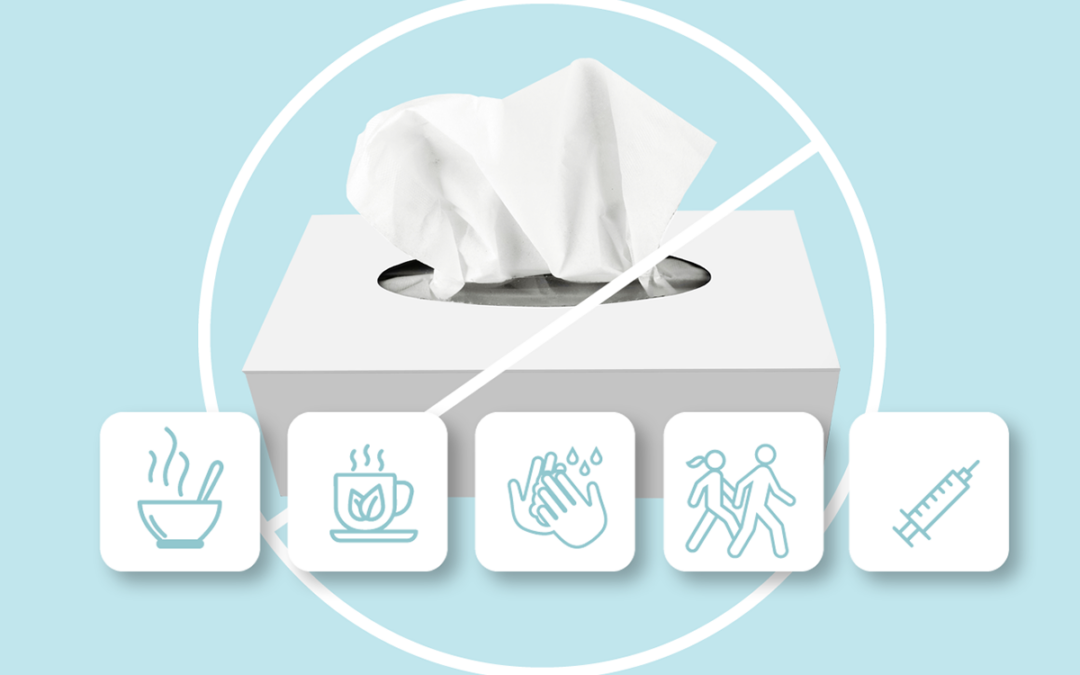

As we trade our t-shirt for a sweater and our shades for a scarf, we are all bracing for another chilly winter. You may also be reaching for those vitamins and smoothies to boost your immunity. Say yes to cosy evenings. Say no to colds and flu.
However, while we are all informed that we need to ‘boost our immune system’ and ‘get vaccinated’, each person is different. How do you even know if your immune system needs a boost? Can you measure how strong your body’s defences are? Some of us may have such a weak immunity that we are constantly sick. Others have never had to take a flu-shot in their lives. How do you know whether you need to pump those vitamins, or if you can glide through the winter without a shred of concern?
The army that makes up your immune system
The first thing we need to know about our immune system is that it is incredibly complex. You basically have a sophisticated army of soldiers, each with a different speciality.
The main parts of your immune system are your white blood cells, antibodies, the complement system, the lymphatic system, the thymus, spleen and bone marrow. There are also aspects of the immune system in your gut and a protective barrier in your brain.
In a nutshell, your immune-system is spread out throughout your entire body, and every little part plays a different role to protect you from disease.
Signs that your immune system is suffering
As we said it helps to imagine that your immunity is like an internal army of soldiers. There are 4 key principles to make an effective army, and our body works in a similar way. Some of the signals that can alert you that body’s ‘army’ is not doing so well, include:
- Your immunity is not effective: allergies & hypersensitivity
A good soldier needs to know the difference between a threat and a non-threat.
When we develop allergic responses, it is similar to having a soldier who cannot distinguish between friend and enemy. If your immune system is hypersensitive to pollen, foods, or stress, or if you easily get rashes, sniffles and issues with your tummy – these may be signs that you have a hypersensitive immune system.
- Your immune system is not rested: stress & tiredness
A tired soldier simply can’t focus and neutralise the enemy. You don’t want your guard sleeping at the gate!
This is one of the most common reasons why we get infections like colds and flu. Long working hours, lack of sleep, and looming deadlines burn out your immune system. Your immunity is working overtime. So, by the time you get exposed to a virus or bacteria, your body simply doesn’t have the strength to fight back.
- Strength in numbers: do you have enough?
You need enough soldiers to protect you from an onslaught of enemies: too little, and they just won’t have the man-power to protect you.
Different parts of your body produce immune cells every day, including your thymus and bone marrow. If these organs don’t get enough nutrition and sleep, they simply can’t produce enough immune cells to protect you. On the other hand, if you are constantly exposed to an overload of viruses and bacteria, your immune cells cannot keep up with the onslaught: it’s outnumbered by the enemy, and your immune system becomes overrun with infection.
- Your system doesn’t have the training
Soldiers need to be combat-ready. Depending on the type of enemy, the soldier needs adequate training. You won’t send a marine onto a plane, or a pilot into the ocean!
In the first few years of life, kids come home with all kinds of infections. Ear, nose, throat infections, tummy-bugs and rashes of all kinds. During this time, their immune systems get trained to combat all kinds of different diseases. Another way we manage this is with vaccines. Taking vaccines is like combat-training for your immune-system. It learns how to fight a simulation of the enemy, so that when the real enemy does arrive your body knows how to defend itself.
Keeping your defences intact
Many of us reach for those immune-boosters and vaccines when we are already starting to get sick. Although this might help, it’s better to be prepared by keeping your system strong. Don’t wait for your first fever or cough to warn you against disease. Keep your body rested, fed and exercised all-year around, and you’ll slide through winter without any down-time.