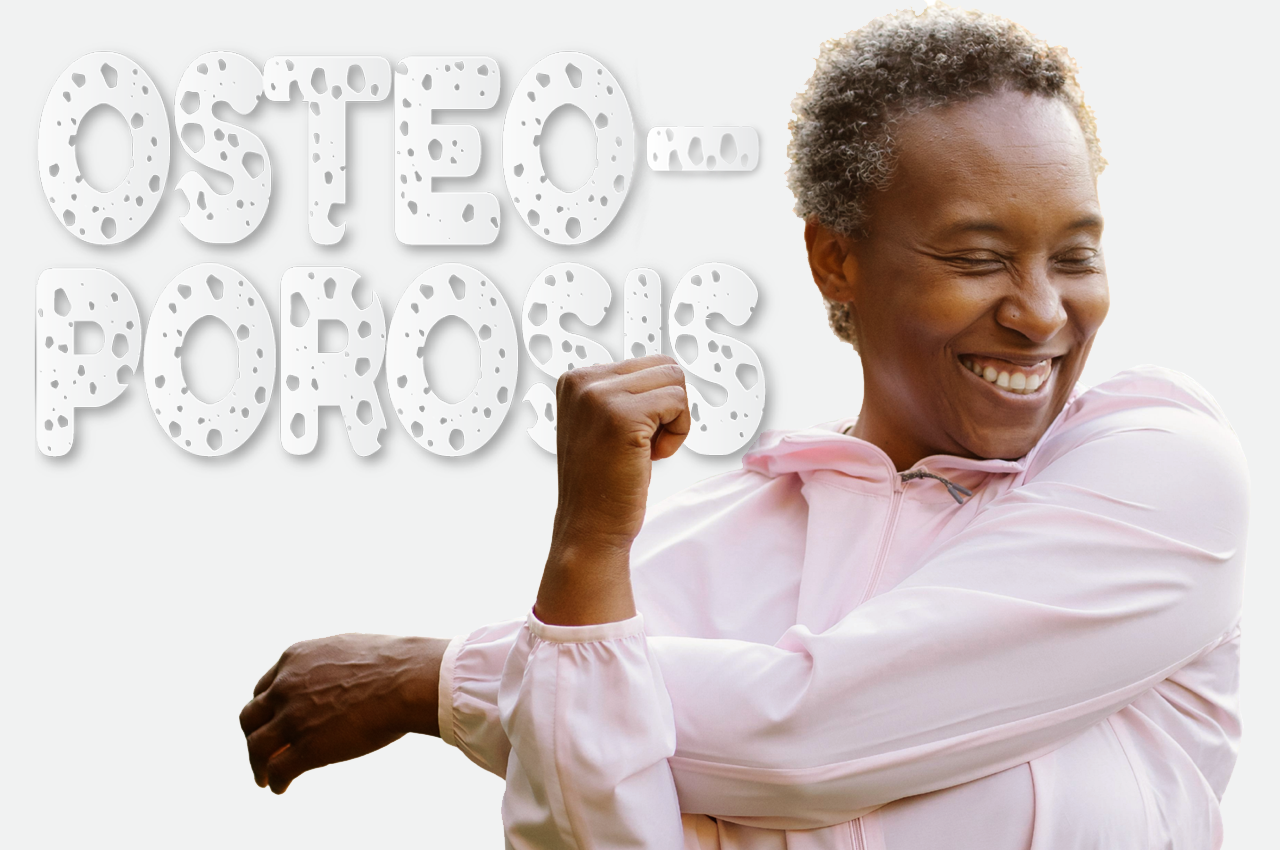
Over the years, your bones gradually break down – and for women after menopause, it’s a particularly big problem.
Your bones may seem solid, but they’re actually living tissue constantly renewing itself – like a well-maintained building. New parts replace old ones all the time, but if the building loses more bricks at a rate than they can be replaced, the structure becomes weaker.
This is what happens with osteoporosis. As time goes by, bones lose density, usually without warning signs. By the stage osteoporosis is diagnosed, the bones may be so weak that all it takes is a small fall or awkward movement to break.
But while bone mass loss is part of ageing, you can strengthen your bones and reduce your risk of fractures.
What is osteoporosis?
Healthy bone consists of an intricate honeycomb-like network. It is this structure that absorbs and distributes the impact of movement during walking, running or lifting.
With osteoporosis, the network’s tiny support structuresbecome thinner or disappear altogether, leaving bigger spaces within the bones. Bone eventually becomes porous, looking more like an old, dry sponge, which leaves it fragile and more likely to break.
A red flag for women
The hormone, oestrogen plays a vital role in bone health. With menopause, this hormone level drops and the body no longer rebuilds bone as effectively. The result is that one in three women typically develops brittle bones.
But osteoporosis doesn’t only affect older women. Other factors that could put you at risk, whether you’re a woman or a man, include smoking, high alcohol intake, being underweight or a lifestyle that involves sitting a lot or lack of regular weight-bearing activity.
Good bone habits
Healthy bones are a lifetime habit – and it’s never too late to start caring for them.
- Keep moving. Weight-bearing activities – such as climbing stairs, walking, carrying groceries and strength training – signal your body to keep repairing and strengthening bones.
- Eat for bone health. Include protein, vitamin D and calcium-rich foods – dairy products, tofu, egg yolks, pilchards and leafy green veg are excellent choices.
- Avoid tobacco and heavy drinking. They weaken bone over time and are linked to increased fractures, plus alcohol can contribute to falls.
3 steps to protect your bones as you age
- Get assessed. If you’re 50+, have osteoporosis risk factors or have broken a bone from a minor incident, ask your healthcare provider about a DEXA scan. This is a type of x-ray that checks bone density.
- Prevent falls. Ensure your home is well lit and clear of trip hazards. Wear stable shoes, not only socks, inside the home. Have regular eye tests and wear your specs.
- Stay active. Exercise encourages bone maintenance and helps improve balance and flexibility, which reduces your risk of falling.
Reference
National Osteoporosis Foundation