Did you know that around 8.6 million people in South Africa live with some level of disability?
That’s more than all the people living in the Eastern Cape.
Disabilities include problems with seeing, hearing, communicating, walking, remembering or concentrating, which can bring all types of day-to-day challenges. But it may not be the disability itself that causes everyday difficulty.
Often, the most frustrating barriers are created by how we interact and share spaces with one another. That’s why each of us can play a role in making life more accessible – with empathy, understanding and a little extra effort. Since November is Disability Awareness Month, let’s think about what we can do.
Look again
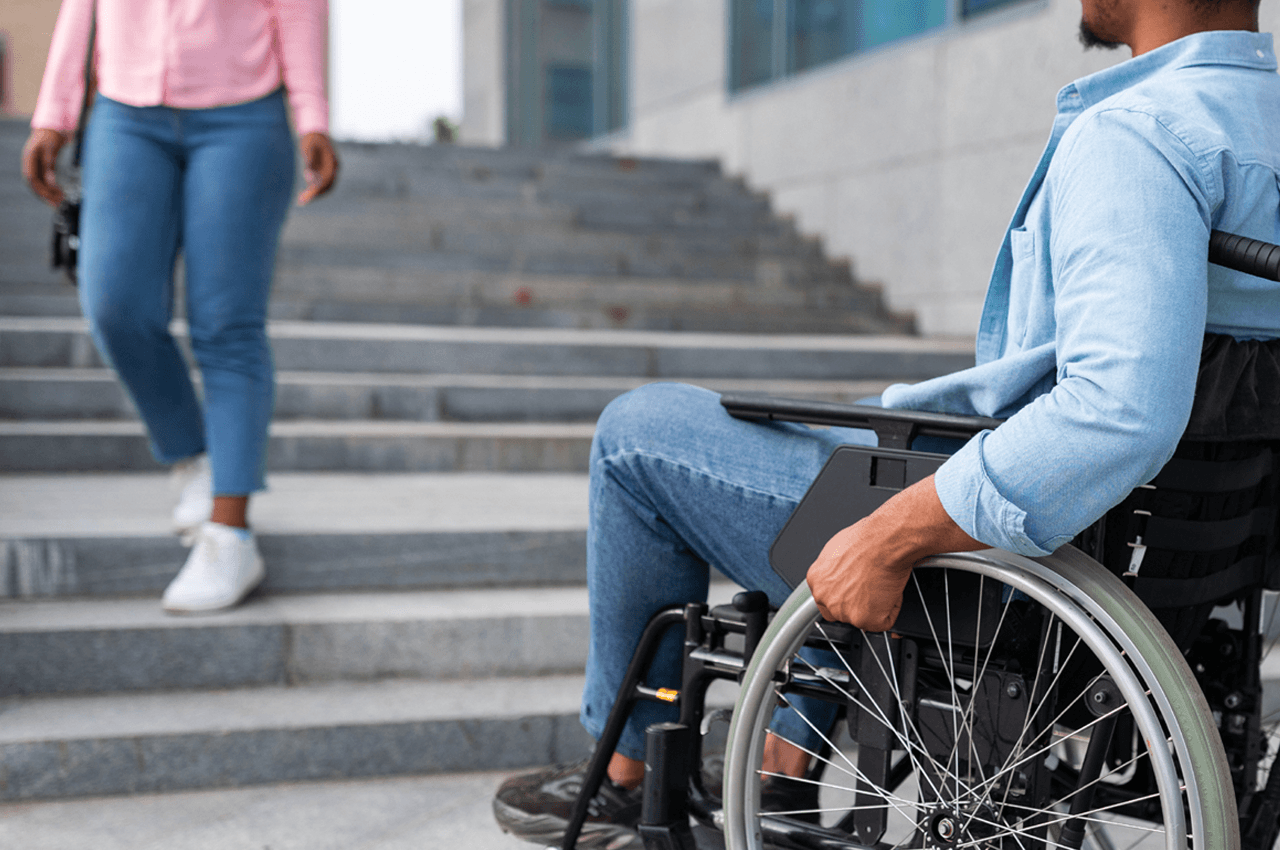
Start by taking a beat to really consider another perspective. Could I navigate that entrance with a wheelchair? Could I follow a presentation with the sound off?
It’s easy to overlook obstacles that aren’t affecting us personally. But understanding other people’s challenges helps us see why these obstacles make a difference – and where we could make changes for the better.
Clear the way
You may be surprised at how much of a difference you can make.
- Physical obstacles: Leave plenty of room for mobility aids when parking next to accessible parking bays. Keep walkways and ramps clear of obstacles. Don’t stand in the way of tactile paving at road crossings.
- Communication: Address the person with the disability, not just their companion. Face someone who is deaf or hard of hearing and speak clearly. Add subtitles to presentations and videos. Be patient in meetings if someone needs more time.
- Spaces: Allow people who move slowly more time to board transport (those extra seconds won’t make you late). Respect accessibility features, such as wheelchair spaces, accessible toilets and Braille information boards.
- Sensory: Give someone the space they need, and be mindful of loud music, flashing lights, and overstimulating environments.
Lend a hand
Helping can be as simple as asking: “Would you like help?” Difficulty doesn’t necessarily mean inability.
- Wheelchairs and other mobility aids: Never move someone’s wheelchair or mobility aid without their permission.
- Guiding someone: Avoid grabbing the person and steering them – offer your arm and ask if they need it.
- Speaking: Don’t assume someone needs you to shout. Place yourself at eye level with someone in a wheelchair or at a slight distance so they don’t have to crane their neck.
- Service dogs: Resist the urge to engage with working service animals, they may be a lifeline for their person.
Avoid assumptions
Be aware that not all disabilities are visible. Some vary from day to day. Someone can look okay but be in severe discomfort, or they may need a mobility device only occasionally. Take notice of what’s around you and let people tell you what they need.
Reference
National Council of & for Persons with Disabilities