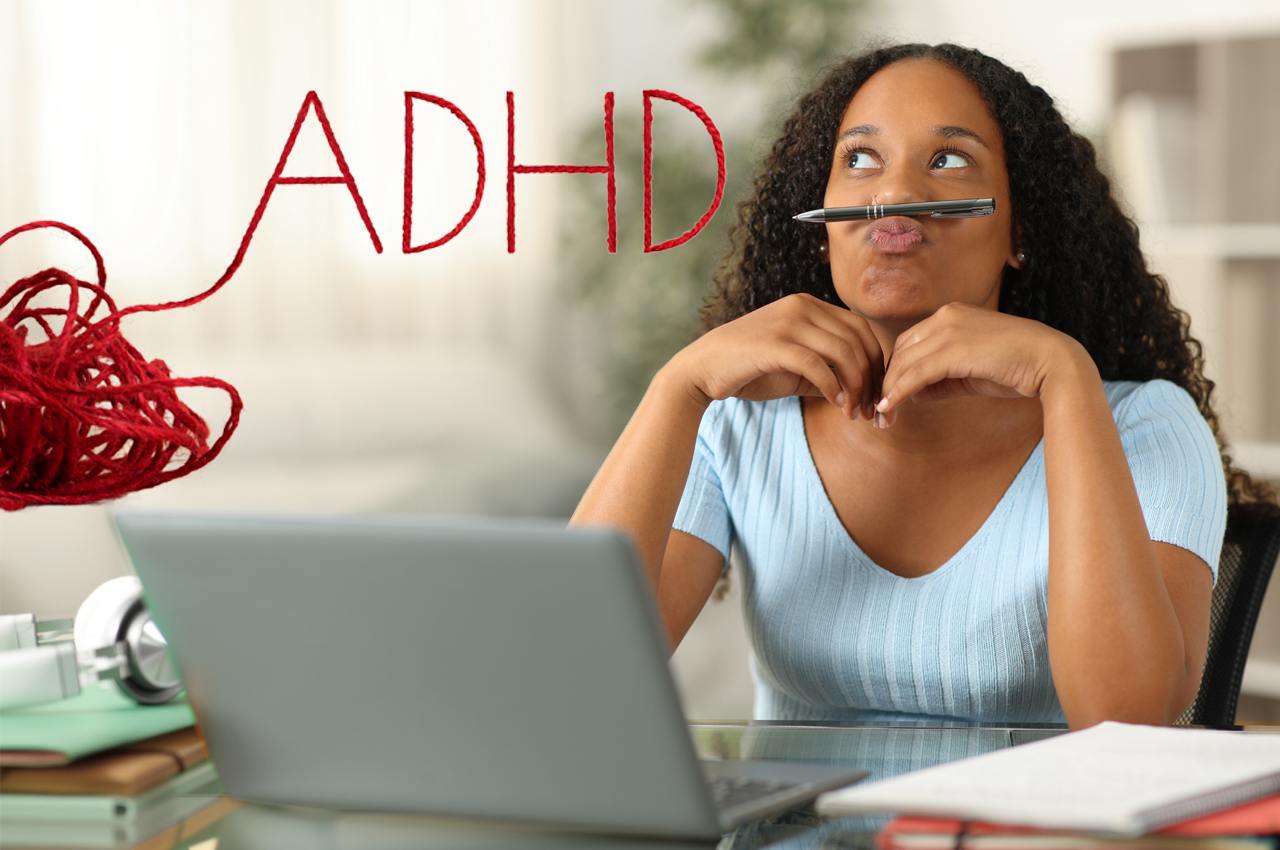
Think attention-deficit/hyperactivity disorder (ADHD) is shorthand for someone who can’t sit still and focus?
In fact, it’s not an inability to focus, it’s about regulating attention. Many people with ADHD describe becoming intensely focused on some tasks – known as ‘hyperfocus’ – while struggling to start or complete things that don’t grab their attention.
ADHD is a condition that affects how the brain manages attention, impulses, emotions and more. What does that mean in real life?
- ADHD doesn’t look the same for everyone
Each person is different. Despite the name, for many people hyperactivity isn’t even a feature, while others may be constantly bursting with energy. Some may be quiet, dreamy, unfocused or easily distracted; others are restless and impulsive. Many move between these traits, depending on the situation.
Girls with ADHD are more likely to come across as inattentive and be described as shy, forgetful, disorganised or ‘day dreamy’. Their symptoms are often overlooked or dismissed as personality characteristics.
Because ADHD isn’t the same for everyone, treatment must be personalised too.
- Adults can also have ADHD
ADHD is now understood to continue into adulthood for many people, but the typical signs differ:
Kids: Struggling with restlessness, getting into trouble at school, fidgeting, losing things, interrupting others.
Adults: Difficulty with time management, prioritising tasks and planning, forgetting appointments, impatience.
Many adults, especially women, weren’t diagnosed early and learnt coping mechanisms which ‘masked’ their symptoms for many years.
- People with ADHD aren’t lazy
ADHD is not a reflection of ability, intelligence or motivation. And it’s not a learning disability.
If someone with ADHD isn’t getting the work done, it’s not because they’re unwilling. It’s because they can be easily distracted or often feel overwhelmed. Many people with ADHD are intelligent, creative thinkers. Attention isn’t absent – it just works differently.
Strategies that work: Breaking a task into manageable steps, setting priorities, using time blocking to switch between focused work and breaks, clearing clutter away to reduce mental overload.
- It goes beyond attention
ADHD also affects emotional regulation, impulse control, ability to understand social cues and self-esteem. Many people with ADHD experience depression, anxiety, insomnia, substance abuse or burnout. Recognising these challenges is a first step toward the right support and treatment.
Useful coping mechanisms: Breathing exercises to regain control, 24-hour rule for big decisions, regular exercise.
- ADHD can be managed
Once ADHD is diagnosed following an expert assessment, treatment is tailored to the individual. This can involve counselling, behavioural therapy and medication that increases chemicals in the brain (neurotransmitters).
Practical lifestyle hacks: Setting timers and reminders, organisational apps, physical calendars.
Reference
South African College of Applied Psychology