
0800 229355 [email protected]
Wellness Café

PSA: The blood test every man should know about

Oct 26, 2026

PSA: The blood test every man should know about

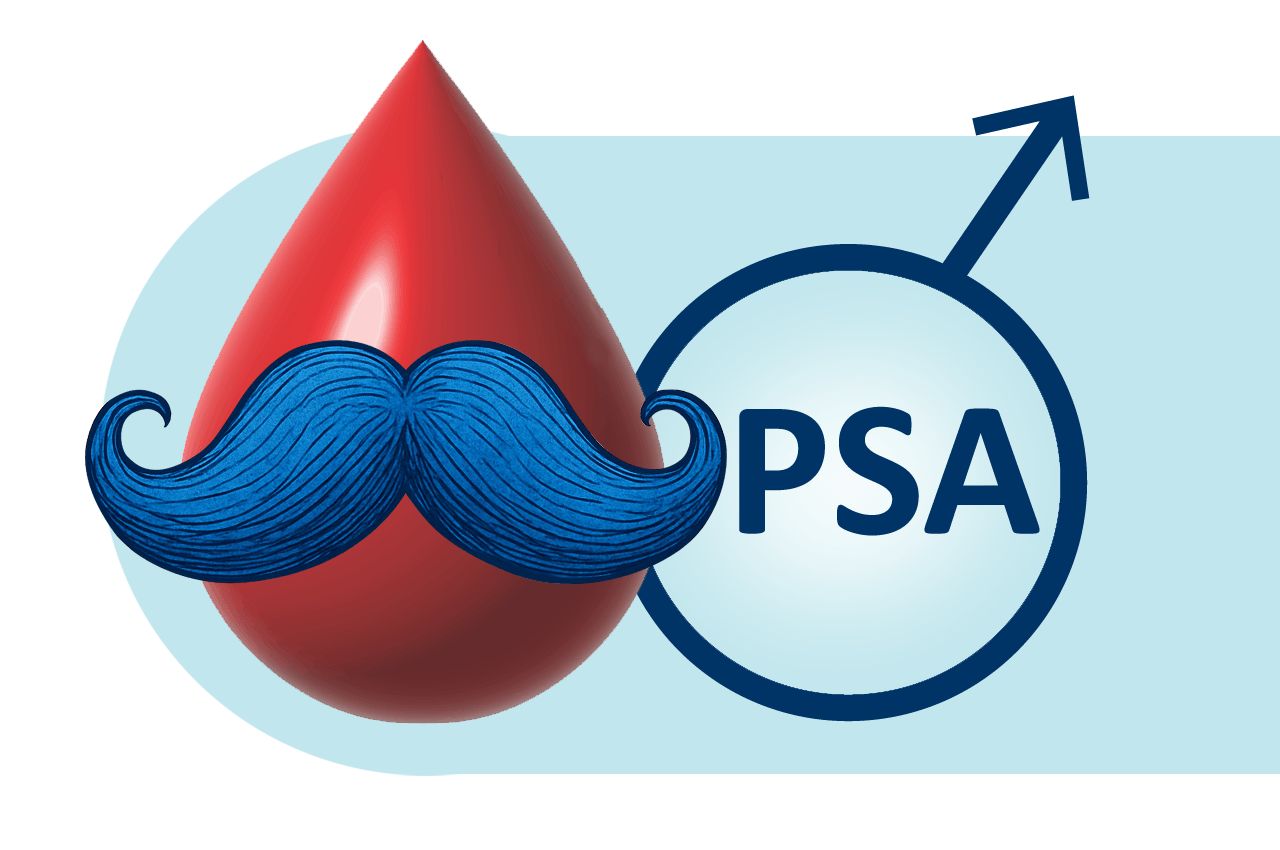
Moustache season is back! But, amid Movember’s buzz about facial fuzz, it’s important to remember what it’s all about: raising awareness of men’s health and prostate cancer.

Fortunately, prostate screening has come a long way. Now, a simple blood test lets doctors quickly identify changes that physical exams may miss.

Prostate know-how

So what does the prostate actually do? The main function of this small gland just below the bladder is to produce the fluid that helps nourish and transport sperm.

Most men never give it a second thought – and that’s a problem because around 1 in 17 South African males will develop prostate cancer.

But here’s the thing: catching it early greatly increases the chances of survival. So, thinking about it is a must for every man over 50, and even earlier for those at high risk. Black and Khoisan men and those with a family history of prostate or breast cancer should start screening by age 45.

How PSA testing works

Prostate cells produce a protein called prostate-specific antigen or PSA. While most of this leaves the body in semen, a tiny amount makes its way into the bloodstream. If something is amiss with the prostate, levels in the blood can increase – that’s what the test measures.

Although it can’t diagnose cancer, it can alert doctors to check things out. For men undergoing prostate cancer treatment, it also lets doctors monitor how the cancer is responding and to check for recurrence in survivors.

Test prep

Good news: a PSA test needs very little preparation and the test itself is just a quick blood draw.

24-48 hours beforehand

  • Ease up on vigorous exercise because this can temporarily raise PSA levels.
  • Avoid ejaculation for the same reason.
  • Ask your doctor if there’s anything else they need you to do, based on your risk factors.

On the day

  • Bring a list of medications you may be taking.
  • Be open with your doctor about any recent infections and activities.

What happens next?

Once your results are in, your doctor will guide you. If your PSA is within normal range and you’re low-risk, they’ll usually recommend rechecking it every few years.

And if it’s raised? Firstly, don’t panic. A raised PSA doesn’t necessarily mean cancer. Your doctor may recommend further PSA tests, a digital rectal exam (DRE) or other investigations.

So can you skip that exam?

Ideally, no. The Cancer Association of South Africa recommends covering your bases by doing both a PSA blood test and a DRE.

Reference

CANSA Prostate Cancer

LATEST POSTS

Paying attention to disability awareness

Paying attention to disability awareness

Did you know that around 8.6 million people in South Africa live with some level of disability?
That’s more than all the people living in the Eastern Cape.
Disabilities include problems with seeing, hearing, communicating, walking, remembering or concentrating, which can bring all types of day-to-day challenges. But it may not be the disability itself that causes everyday difficulty.

5 surprising facts about ADHD

5 surprising facts about ADHD

Think attention-deficit/hyperactivity disorder (ADHD) is shorthand for someone who can’t sit still and focus?
In fact, it’s not an inability to focus, it’s about regulating attention. Many people with ADHD describe becoming intensely focused on some tasks – known as ‘hyperfocus’ – while struggling to start or complete things that don’t grab their attention.

When children get cancer

When children get cancer

No one wants to hear that a child has cancer. Fortunately, childhood cancer is rare and accounts for less than 1% of all cancers. 
The danger is that many childhood cancers progress very quickly, so it’s important for caregivers to be aware of warning signs – and seek help. 
With September being Childhood Cancer Awareness Month, now is the time to learn more. 

When breastfeeding does not work for you

When breastfeeding does not work for you

Breastfeeding is often portrayed as one of the most natural parts of motherhood – an instinctive, nurturing interaction between mother and child. But what if that image of effortless nursing doesn’t reflect your reality?
You’re not alone. In fact, 60-80% of new moms say they have difficulty breastfeeding. What’s more, in South Africa, the tally for infants under six months that are exclusively breastfed is less than one in three.

Why you should start building bone today

Why you should start building bone today

Over the years, your bones gradually break down – and for women after menopause, it’s a particularly big problem.
Your bones may seem solid, but they’re actually living tissue constantly renewing itself – like a well-maintained building. New parts replace old ones all the time, but if the building loses more bricks at a rate than they can be replaced, the structure becomes weaker.

You May Also Like: