
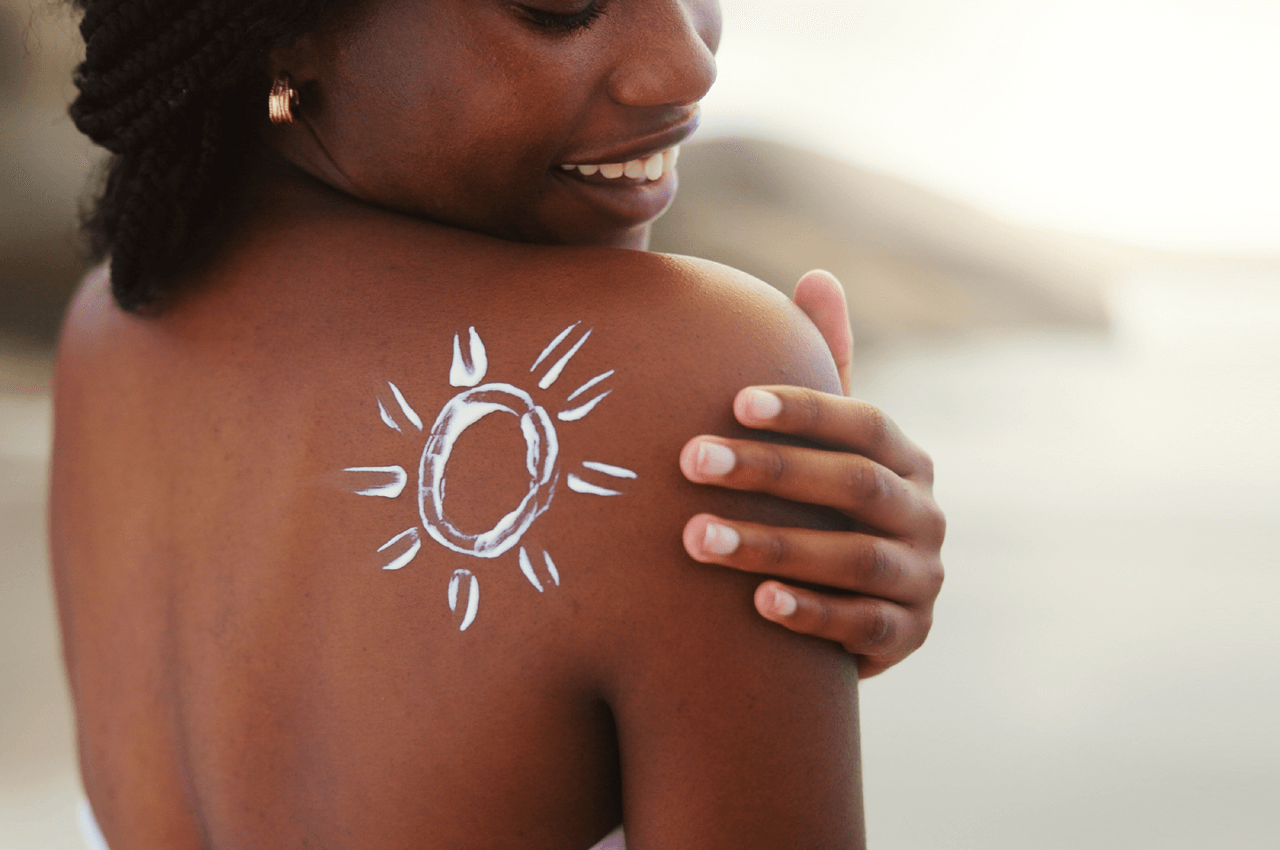
The belief that people with darker skin can’t get skin cancer is simply false. In reality, anyone can be affected.
When people assume their skin tone protects them from the sun, they may overlook warning signs.
As a result, skin cancer in darker-skinned individuals is often caught at a more advanced stage, making treatment more difficult. Yet, skin cancer is highly treatable if caught early.
Why darker skin is still at risk
Melanin is the pigment in your body responsible for the colour of your skin, hair and eyes. It absorbs ultraviolet (UV) rays from the sun and stops it damaging your DNA.
So the more melanin you have, the longer you can be exposed to the sun without burning, but it doesn’t provide complete protection from skin cancer.
While sun damage is the main cause of skin cancers, in darker skin, some types appear on low-exposure areas, such as the bottom of your feet.
Types of skin cancer
The most common skin cancers are basal cell carcinoma, squamous cell carcinoma and melanoma. While the first two are usually slow growing, the last spreads fast and aggressively.
- Basal cell carcinoma presents as:
a small, shiny or pearly bump (usually black, brown or blue on dark skin), or
– a flat, scaly/rough patch, or
– a waxy scar-like area.
It’s sometimes mistaken for recurring pimples, moles or eczema.
- Squamous cell carcinoma (most common skin cancer in Blacks and Indians) presents as:
– a rough/scaly patch or crust, or
– a recurring sore that sometimes bleeds.
It’s sometimes mistaken for eczema, psoriasis or warts.
- Melanoma presents as:
– a mole or bump that’s asymmetrical, has irregular edges and uneven colour.
In darker skin tones they are often found on the palms, soles, fingers, toes and nail beds.
Protect yourself
- Sunscreen: At least SPF20 every day, reapplied two-hourly – more when sweating or swimming.
- Cover: Stay in the shade between 10am and 4pm. If you are out, wear a hat, long sleeves, and UV400 sunglasses.
- Check: Do a monthly self-check, including feet and hands.
- Schedule: Have yourself annually checked – but if something seems off, book immediately.
TIP! To cover your body, you need enough sunscreen to fill a shot glass, plus one teaspoon for your face and neck (don’t forget your ears).
Warning signs
There are many premalignant forms of cancer and any suspicious lesion should be seen by a medical professional.
REMEMBER! The ABCDE rule of skin cancer:
- The shape is Asymmetrical
- The Border is non-uniform, raised etc.
- Any change in Colour
- An increase in Diameter
- A mole or skin spot that changes (Evolving) over time in size, shape, colour, or symptoms (such as itching or bleeding).
All above features should be checked out.
Reference
CANSA Skin Cancer Fact Sheet