
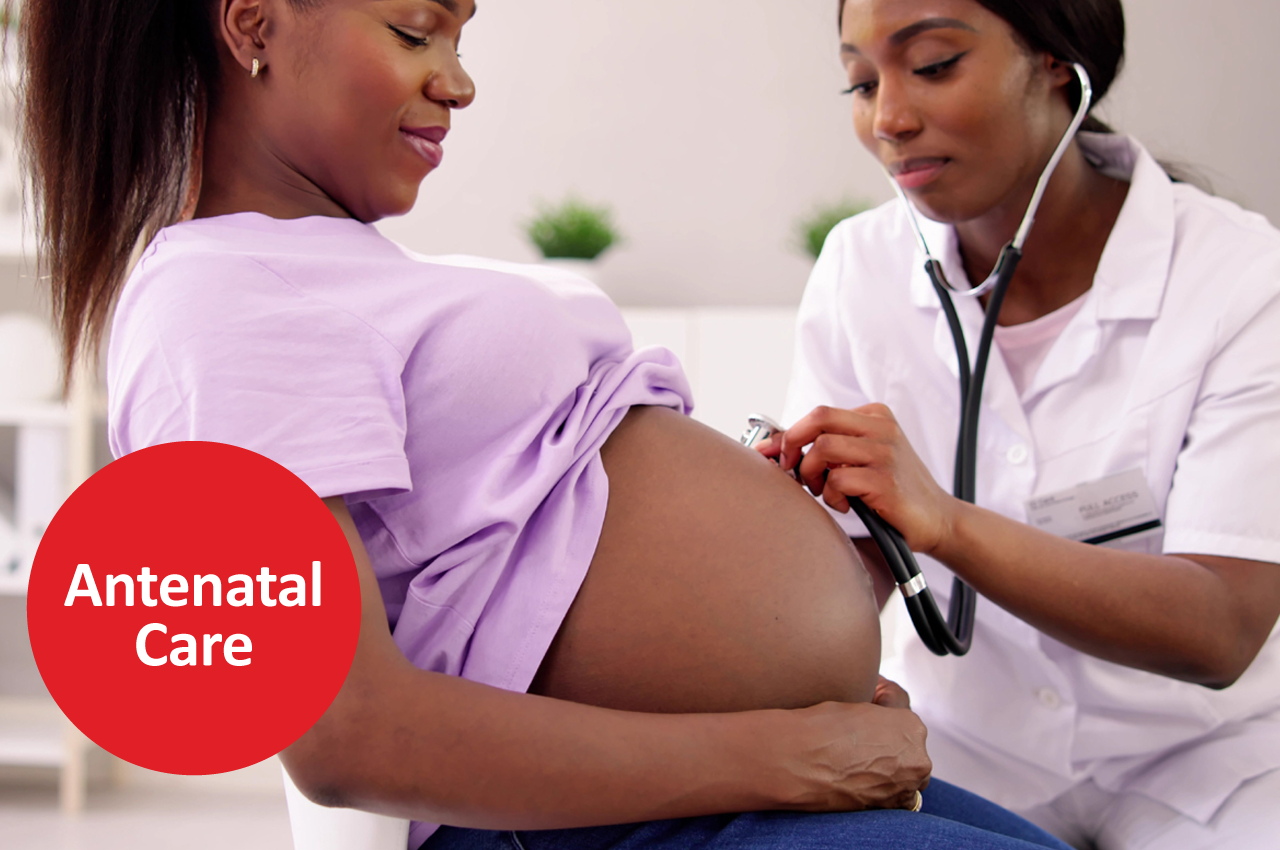
Antenatal care – the healthcare you receive during pregnancy – is so important that the World Health Organisation recommends at least eight visits throughout pregnancy, ideally starting before 10 weeks.
What to expect during your health appointments
These regular check-ups, blood and urine tests, screening and ultrasounds watch over your health and your baby’s development. And that’s crucial for spotting potential issues early so you can receive treatment and prevent complications. But it’s not just about tests. Antenatal visits are also your chance to get advice, ask questions, gain valuable knowledge and find reassurance.
First (booking) visit
History and assessment
- Medical, surgical, obstetric, and family history
- Menstrual history and estimated due date
- Social history (nutrition, smoking, alcohol, drugs)
- Mental health screening
Physical examination
- Height, weight, body mass index (BMI)
- Blood pressure
- General and abdominal exam
Laboratory tests
- Blood group and Rh factor
- Haemoglobin/full blood count
- HIV, syphilis, hepatitis B (possibly hepatitis C)
- Urinalysis (protein, sugar, infection)
- Blood glucose (fasting or random)
Ultrasound examinations
- Early ultrasound (≤12 weeks): dating, viability
- Mid-trimester scan (18–22 weeks): foetal anatomy, placenta, amniotic fluid
Ongoing care at each visit
- Blood pressure
- Weight gain monitoring
- Fundal height (measurement of the distance from your pubic bone to the top of your uterus used to track foetal growth, estimate gestational age and to check for complications.)
- Foetal heart rate
- Assessment of foetal movements
- Urine testing (protein, glucose)
- Identification of danger signs
So what is your healthcare team looking out for?
- High blood pressure
High blood pressure in the last trimester, known as pre-eclampsia, can put the life of mother and baby at risk. But, if caught early, it can be controlled with medication and lifestyle adjustments. Because there are no noticeable symptoms at first, it’s key to have regular blood pressure and urine tests (pre-eclampsia leads to too much protein in your pee).
- High blood sugar
Never had blood sugar issues? You can still develop gestational diabetes, a treatable blood sugar disorder that occurs in pregnancy. It’s on the rise in South Africa, with as many as two in every 10 women affected.
Because screening is the only way to detect blood sugar changes, antenatal visits usually include routine blood and urine glucose tests.
- Nutrient shortages
Shortages of iron, folic acid/folate and vitamin B12 (often leading to anaemia) are extremely common during pregnancy in South Africa. Not getting enough of these nutrients can cause problems like tiredness and breathlessness, and complications like early labour. Low folate and B12 are also linked to issues with the developing baby’s brain and spinal cord.
Blood tests detect these deficiencies. Treatment is generally straightforward, usually with diet and prenatal vitamins.
- Health conditions
Infectious illnesses such as HIV/Aids and TB, as well as disorders such diabetes and autoimmune disease, create extra challenges during pregnancy. For moms living with HIV, this incluses ensuring they are on antiretrovirals (ARVs) and their viral loads are undetectable. Regular visits help you and the healthcare team to monitor and manage them and reduce complications. You could also decrease the chance of passing on infectious illness to your baby.
- Your baby’s health
Ultrasound scans, heartbeat checks, and growth measurements track the development of your unborn baby. This will help to pick up problems – many of which can be managed or treated – and allow you to prepare for potential challenges.
Make the most of your antenatal visits
- Book appointments ahead.
- Write down questions in advance so you don’t forget anything.
- Be honest so your healthcare practitioner can tailor your care.
- Make notes or voice recordings during the appointment so you can return to it later.
- Take someone for support.
- Remember: this is your Don’t feel rushed – you and your baby matter.
Reference
Department of Health Antenatal Care handbook