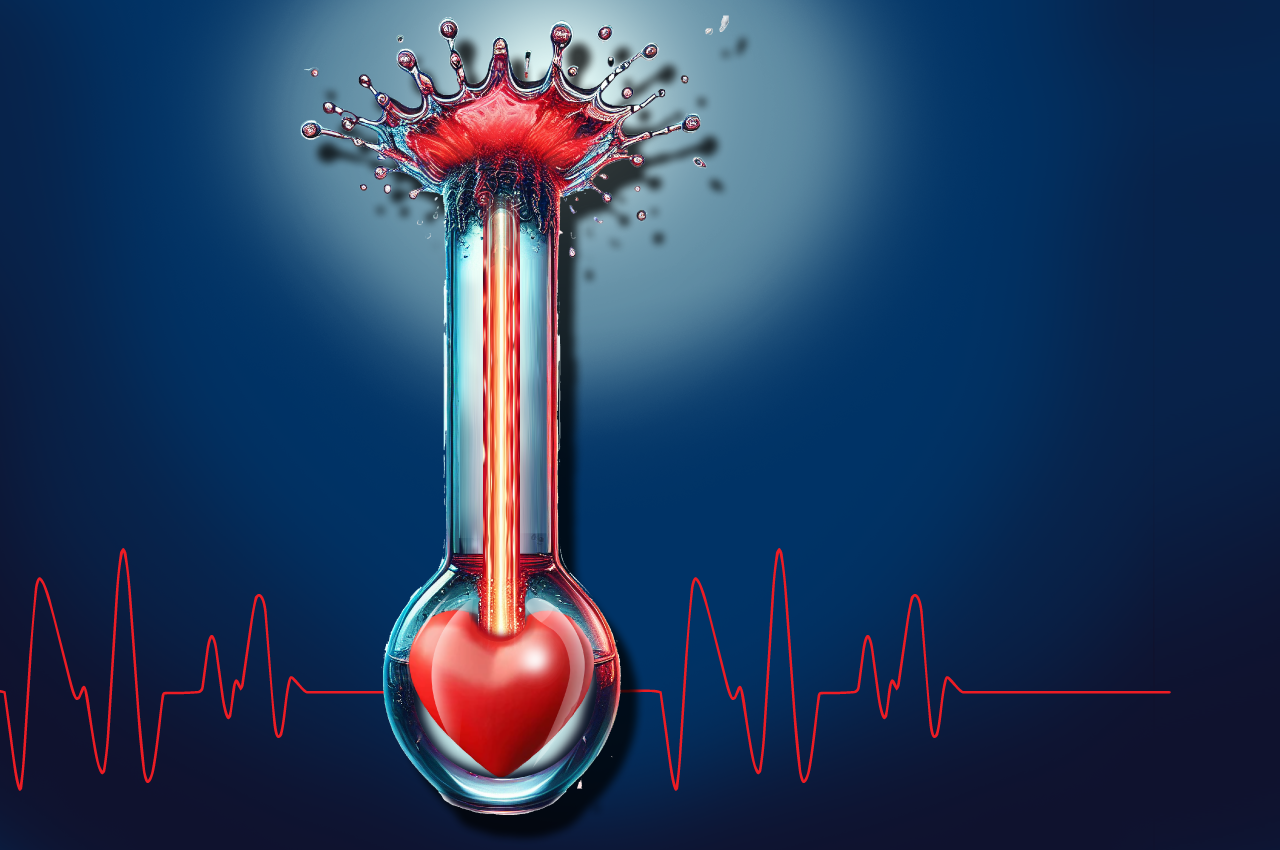
When your body senses danger that needs quick action, your ‘fight or flight’ response kicks in. Your heart beats faster, your breathing speeds up, muscles contract and your blood pressure spikes.
This is meant to help you deal with the threat, such as avoiding a car crash. Once it’s passed, your system will reset to normal. But your body can’t tell the difference between real danger and daily stress. Whether swerving for a car or racing to meet a deadline, the response is the same.
Stress is a normal part of life – but when it hangs around too long or feels overwhelming, it starts affecting your body, mood, sleep, and relationships.
While there is no hard evidence to show that daily stress directly causes high blood pressure (hypertension), being in a constant ‘fight or flight’ state does influence our behaviour, which can lead to high blood pressure. When you’re stressed you’re more likely to skip the gym, grab takeaways and sacrifice sleep. Not to mention drinking or smoking to blow off steam.
The goal isn’t to eliminate stress completely (that’s not realistic), but to manage it so it doesn’t run the show.
A simple starting point
If you’re not sure where to begin:
- Take a 10-minute walk.
- Try one breathing exercise.
- Write down your top three stressors.
That’s enough to get momentum going.
Heart health
Having a handle on your stress includes managing your health. World Hypertension Day is on 17 May. Celebrate by having your blood pressure checked. Spotting changes early on is key to taking action.
| Blood pressure | Range |
| 120/80 | Normal |
| 130–139/85–89 | Raised |
| 140/90+ and above | High |
Note: This information is not a substitute for professional medical advice.
Reference
Heart and Stroke Foundation of South Africa