Want to stop the sniffles in their tracks this season? These five strategies will protect, nurture and support your body.
South Africa’s colder months can bring a mixed bag of winter woes. More time indoors, closer contact with others, indoor heating – the perfect conditions for colds and flu. Shorter days also affect vitamin D levels and mood. It’s not surprising that many of us end up feeling less than sunny.
-
Warm your tummy – and your resistance
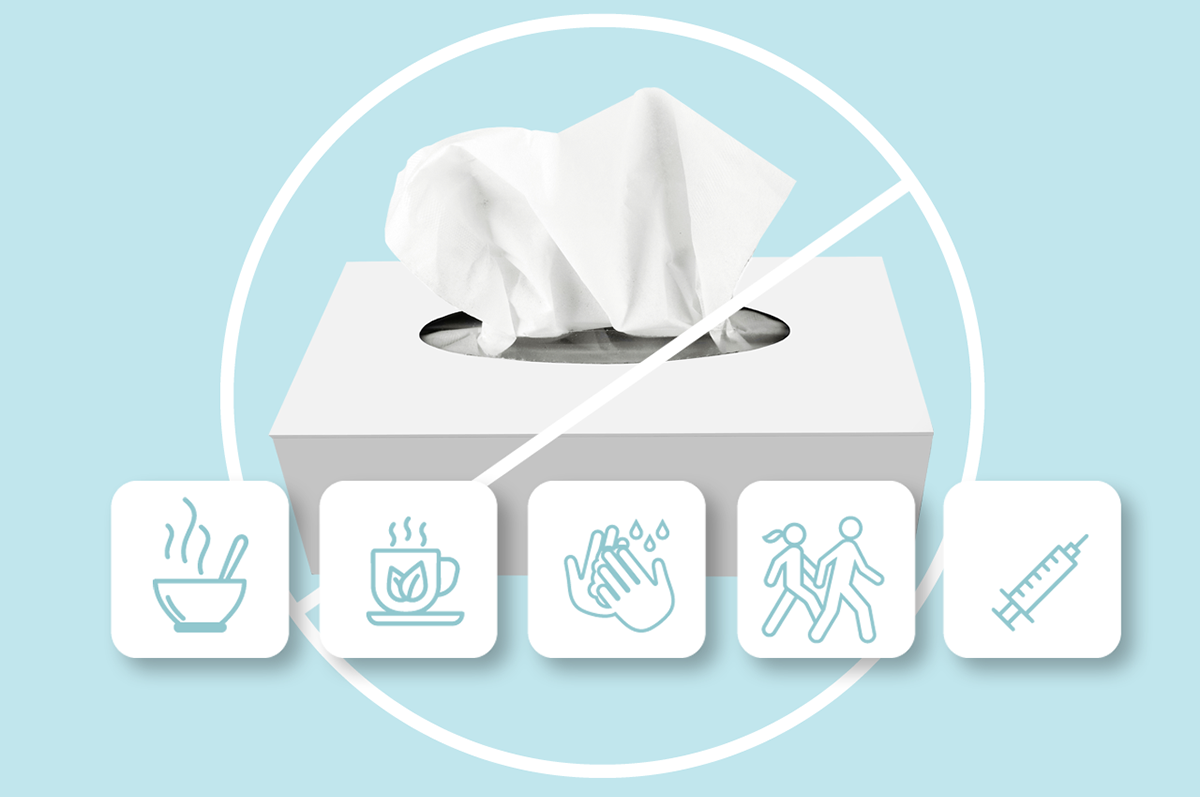
There’s nothing like a hearty soup or stew to warm you up from the inside. Cold-weather eating is not only about comfort food, it also provides the nourishment to fight off infections.
-
- Soups of red and orange veggies (pumpkin, butternut, beetroot) are packed with antioxidants to boost your immune system.
- Bulk out stews with legumes (butter beans, lentils, chickpeas) to increase your intake of magnesium, zinc and iron.
- Add extra warmth with garlic, chilli, turmeric and ginger – they support healthy circulation and have anti-inflammatory and immune-supportive properties.
-
Stay hydrated
You may not feel thirsty, but your body still needs fluid in cold weather. All the more so when you’re around indoor heating.
A dip in hydration can cause the protective lining of your nose and airways to dry out. The result? You’re more vulnerable to airborne viruses.
Don’t feel like sipping cold water when it’s chilly out? Herbal teas, rooibos and warm lemon water count towards your daily fluid intake too.
-
Be smart about hygiene
Help break the cold-and-flu infection chain.
-
- Wash hands regularly with soap and water.
- Open windows for ventilation to reduce build-up of airborne viral particles.
- Try not to touch your face unnecessarily (we do it unconsciously hundreds of times a day). Every contact is a chance for virus transfer.
- Cover your nose and mouth with a tissue every time you cough or sneeze, then toss it in the bin to prevent reinfection.
-
Keep moving to keep toasty
Exercise improves circulation, warms you, helps keep immune cells moving, boosts mood and helps reduce winter weight gain.
Wrap up warmly and take a brisk walk outdoors – daylight helps boost seasonal low mood and sunshine is needed to produce vitamin D, essential for a strong immune system. Outdoors not an option? Try a fun online workout.
-
Don’t skip vaccines
The flu vaccine adds an extra layer of protection by training your immune system to recognise common flu strains. It helps reduce your risk of infection and may lessen severity if you do catch it.
Reference
Cleveland Clinic: Winter health